Thursday, October 27, 2016

Wednesday, October 26, 2016
Monday, August 29, 2016
Thousands of Refugees Rescued Off the Coast of Libya - ABC News

Thousands of refugees trying to reach Europe were rescued off the coast of Libya on Monday morning after their overcrowded wooden boats sent people falling into the Mediterranean Sea.
The refugees, many of them from Eritrea, jumped into the water from more than 20 boats roughly 13 miles north of Sabratha, a coastal city in Libya. They were helped by the Italian Coast Guard and workers for a non-governmental organization.
Images show people struggling to swim in the water and groups clustered together in the rescue vessels.
 Emilio Morenatti/AP Photo
Large numbers of small children who apparently braved the perilous journey along with their families can be seen seated on the laps of adults.
In one image, clusters of personal belongings are shown scattered around the deck of an abandoned ship.
Imagery of refugees crossing the Mediterranean Sea has become iconic in recent years, as hundreds of thousands seek safety or employment by journeying to Europe from the shores of Morocco, Algeria, Libya, Egypt, and Turkey.
 Emilio Morenatti/AP Photo
The UN reports that 271,218 of people arrived by sea this year, and that 3,167 who attempted such a trip are either missing or dead.
Although much attention has focused on refugees from war-torn Syria, many refugees are also from Eritrea.
 Emilio Morenatti/AP Photo
Hundreds of thousands have fled Eritrea, located on the horn of Africa and bordering Sudan, due to the country's violent, repressive government and limited opportunity for many citizens, according to rights organizations.
 Emilio Morenatti/AP Photo
"Eritrea’s dismal human rights situation, exacerbated by indefinite military conscription, has led thousands of Eritreans to flee every month," according to Human Rights Watch.
 Emilio Morenatti/AP Photo
The group cites forced labor, arbitrary arrests, detentions, torture, restrictions on freedoms of expression and movement, and repression of religious freedom as being among the incentives Eritreans have to flee their country.
Tuesday, August 2, 2016
Sudan’s RSF militia arrests 600 illegal migrants near Libyan and Egyptian border - Sudan Tribune: Plural news and views on Sudan
Sudan’s RSF militia arrests 600 illegal migrants near Libyan and Egyptian border
 Email
Email Print
Print Save
Save


July 30, 2016 (EL-FASHER) - Commander of the Rapid Support Forces (RSF) Mohamed Hamdan Daglo, (aka Hametti) said his fighters have arrested about 600 Ethiopian illegal migrants near Sudan’s border with Libya and Egypt.
On Saturday, Sudanese army’s sixth infantry division in North Darfur capital El-Fasher has celebrated the return of the RSF from the Northern State.
Speaking during the celebration, Daglo said his forces arrested about 600 illegal Ethiopian migrants and thwarted several human trafficking operations near Sudan’s border with Egypt and Libya and at Al-Nakheel area in the Sahara desert.
He pointed those illegal migrants have been handed over to the authorities in North Darfur as a prelude to repatriate them into their home country.
The RSF commander said the media has turned a blind eye on numerous offences committed by rebel groups including killing incidents, displacement of civilians and destruction of civil institutions.
Daglo hailed discipline among RSF fighters, saying Sudan became a crossing point for illegal migrants seeking to travel to Europe and the United States.
He called on the West to appreciate efforts exerted by the Sudanese government to combat human trafficking and illegal migration across the Sahara.
Sudan is considered as a country of origin and transit for the illegal migration and human trafficking. Thousands of people from Eritrea and Ethiopia are monthly crossing the border into the Sudanese territories on their way to Europe through Libya or Egypt.
For his part, the commander of the sixth infantry division Ashraf Mahdi El-Rifaie said North Darfur became free of rebellion due to efforts of the Sudanese army, RSF and the rest of the regular forces.
“The RSF carried out its full role and combed the area of the rebel remnants and human traffickers” he said
He added that the RSF managed to free hundreds of foreigners from the grip of human traffickers on the desert near the Egyptian border.
Earlier this month, Daglo said his men arrested over 300 illegal immigrants heading to Libya across the remote desert of Northern State.
Deputy Governor of North Darfur, Mohamed Braima, for his part, described the RSF as the right arm of the Sudanese army, saying they play a major role in maintaining peace and security.
He pointed that the security situation in Darfur is stable, saying the government works to amend the social fabric and hold tribal reconciliations to unify the internal front and address the effects of war.
Earlier this year, the European Union granted a €100m development package to address the root causes of irregular migration in Sudan. The financial support came after pledge by the Sudanese government to cooperate with Brussels to stop human trafficking to Europe.
In January 2014, the Sudanese parliament approved an anti-human trafficking law which punishes those involved with human trafficking with up to 20 years imprisonment.
The RSF, which is widely known as the Janjaweed militias, were originally mobilized by the Sudanese government to quell the insurgency that broke out in Sudan’s western region of Darfur in 2003.
The militia was reactivated and restructured again in August 2013 under the command of NISS to fight the alliance of rebel groups from Darfur region, South Kordofan and Blue Nile states following joint attacks in North and South Kordofan in April 2013.
(ST)
- SRF field commander Mohamed Hamdan (Hametti) speaks in a press conference in Khartoum on Wednesday May 14, 2014 (ST)

On Saturday, Sudanese army’s sixth infantry division in North Darfur capital El-Fasher has celebrated the return of the RSF from the Northern State.
Speaking during the celebration, Daglo said his forces arrested about 600 illegal Ethiopian migrants and thwarted several human trafficking operations near Sudan’s border with Egypt and Libya and at Al-Nakheel area in the Sahara desert.
He pointed those illegal migrants have been handed over to the authorities in North Darfur as a prelude to repatriate them into their home country.
The RSF commander said the media has turned a blind eye on numerous offences committed by rebel groups including killing incidents, displacement of civilians and destruction of civil institutions.
Daglo hailed discipline among RSF fighters, saying Sudan became a crossing point for illegal migrants seeking to travel to Europe and the United States.
He called on the West to appreciate efforts exerted by the Sudanese government to combat human trafficking and illegal migration across the Sahara.
Sudan is considered as a country of origin and transit for the illegal migration and human trafficking. Thousands of people from Eritrea and Ethiopia are monthly crossing the border into the Sudanese territories on their way to Europe through Libya or Egypt.
For his part, the commander of the sixth infantry division Ashraf Mahdi El-Rifaie said North Darfur became free of rebellion due to efforts of the Sudanese army, RSF and the rest of the regular forces.
“The RSF carried out its full role and combed the area of the rebel remnants and human traffickers” he said
He added that the RSF managed to free hundreds of foreigners from the grip of human traffickers on the desert near the Egyptian border.
Earlier this month, Daglo said his men arrested over 300 illegal immigrants heading to Libya across the remote desert of Northern State.
Deputy Governor of North Darfur, Mohamed Braima, for his part, described the RSF as the right arm of the Sudanese army, saying they play a major role in maintaining peace and security.
He pointed that the security situation in Darfur is stable, saying the government works to amend the social fabric and hold tribal reconciliations to unify the internal front and address the effects of war.
Earlier this year, the European Union granted a €100m development package to address the root causes of irregular migration in Sudan. The financial support came after pledge by the Sudanese government to cooperate with Brussels to stop human trafficking to Europe.
In January 2014, the Sudanese parliament approved an anti-human trafficking law which punishes those involved with human trafficking with up to 20 years imprisonment.
The RSF, which is widely known as the Janjaweed militias, were originally mobilized by the Sudanese government to quell the insurgency that broke out in Sudan’s western region of Darfur in 2003.
The militia was reactivated and restructured again in August 2013 under the command of NISS to fight the alliance of rebel groups from Darfur region, South Kordofan and Blue Nile states following joint attacks in North and South Kordofan in April 2013.
(ST)
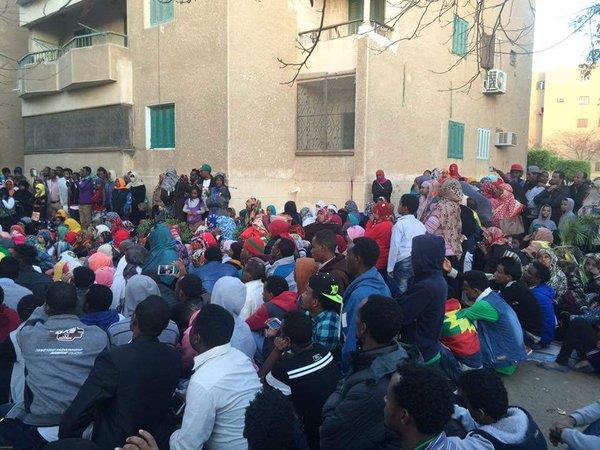
Egypt- UNHCR is saddened by incident involving Oromo people seeking asylum: Argaz | MENAFN.COM


 E-Mail Article
 Printer-Friendly
 Translate
 Share Article

 Text Size

Tuesday, June 7, 2016
EU considering working with Sudan and Eritrea to stem migration | World news | The Guardian
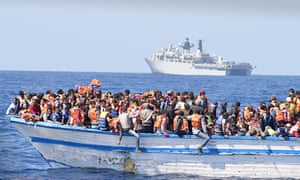
Europe is considering whether to forge ahead with a plan to work with repressive African regimes in an attempt to stem migration flows, according to the draft version of a policy expected to be finalised by European officials on Tuesday.
To stop refugees reaching southern Europe from Africa, Europe is mulling whether to partner with Sudan, whose president is wanted for war crimes, and Eritrea, whose government is accused of crimes against humanity by the UN.
Both countries are a significant source of refugees in Europe, while Sudan is also a major migration thoroughfare for people moving between east Africa and the Libyan coast, the springboard for most people-smuggling missions to Italy. Over 150,000 people reached Europe from Libya in 2015 – only slightly fewer than the record of 170,000 in 2014.
In a draft document seen by the Guardian ahead of its official release by European civil servants on Tuesday, the EU has pledged to go ahead with a project that could see Europe provide Sudan’s security services with more equipment and funds to stop refugees, as well as assisting Eritrea’s judiciary.
The text has yet to be finalised, and EU sources could not confirm that the sections concerned would be kept in the text when it is officially published on Tuesday. The plans are only the latest iteration of a new EU migration strategy still being fleshed out by European leaders.
The proposed strategy also includes sending more aid and technical assistance to about 20 countries including Jordan, Lebanon, Niger, Libya and Ethiopia, in a bid to persuade their governments to do more to curb irregular migration.
Following a fall in the number of people reaching Europe from Turkey, European leaders are now trying to curb migration from elsewhere in the region. Favourable trade deals and visa liberalisation programmes are among the suggested ways of winning the acquiescence of target countries. Vague reference to legal pathways for refugees to Europe, as well as increased job opportunities for refugees left behind in Africa and the Middle East, are also included among the so-called “country packages”.
But buried deep within the draft document, the most eye-catching announcement concerns the EU’s “Better Migration Management” project, which the draft suggests “will start this summer”.
The project was first floated publicly in December, and according to documents released at the time could involve the provision of cars, equipment and possibly aircraft to the Sudanese government – as well as “capacity-building” for Eritrean judges, whom the UN accuses of aiding and abetting President Isaias Afwerki’s despotic regime in Asmara.
The proposals have been met with fury by some rights campaigners and leftwing MEPs. Barbara Spinelli, an Italian MEP from GUE/NGL, a leftwing coalition in the European parliament, said: “These ‘country packages’ would make us complicit with dictatorships and deny basic fundamental rights to people fleeing wars, famine and extreme poverty … The commission should be ashamed of this proposal.”
Sara Tesorieri, a policy adviser at Oxfam, accused EU leaders of compromising European values, should the proposals come to pass on Tuesday. She said: “The EU needs to reconsider very carefully exactly how much it is willing to sacrifice on the altar of migration, because right now, they are headed down a road where they will have a foreign policy that consists of a single objective. And they will be bargaining with regimes that they have held at arm’s length.”
She added the EU “should be rethinking its approach. It needs to return to reframing migration as an opportunity. The reality is that migration is increasing globally and Europe is going to be part of that.”
A spokesperson for the European commission said: “There are also no [concrete] plans at this stage to provide equipment to the Sudanese government. Any decision to provide civilian equipment will be taken on the basis of a forthcoming appraisal mission to Sudan from the EU and the consortium of EU member states.”
The German development minister, Gerd Müller, last week told the Guardian that Germany had no plans to send money to Sudan, contrary to reports in Der Spiegel and statements within EU policy documents, including the draft seen by the Guardian.
Tuesday’s policy paper is only the latest attempt by the EU to stem the flow of people arriving on Europe’s shores. At a summit in Valletta last November, the EU promised to give 23 African nations a share in a €1.8bn (£1.4bn) “trust fund”, money for employment projects and border controls to dissuade people from travelling to Europe.
Some countries would like to see the EU go further, with a tougher approach to refugees. Austria’s foreign minister, Sebastian Kurz, has called for asylum seekers to be kept on islands rather than having direct access to the continent. In aninterview with Die Presse on Sunday, he urged the EU to follow the Australian model, where migrants and refugees are sent to Pacific island detention centres, where they are held indefinitely, while their asylum applications are processed.
Hungary, a staunch opponent of plans to redistribute refugees around the bloc, had already proposed that refugees be restricted to “closed and protected” centres beyond the EU’s borders.
Subscribe to:
Posts (Atom)